
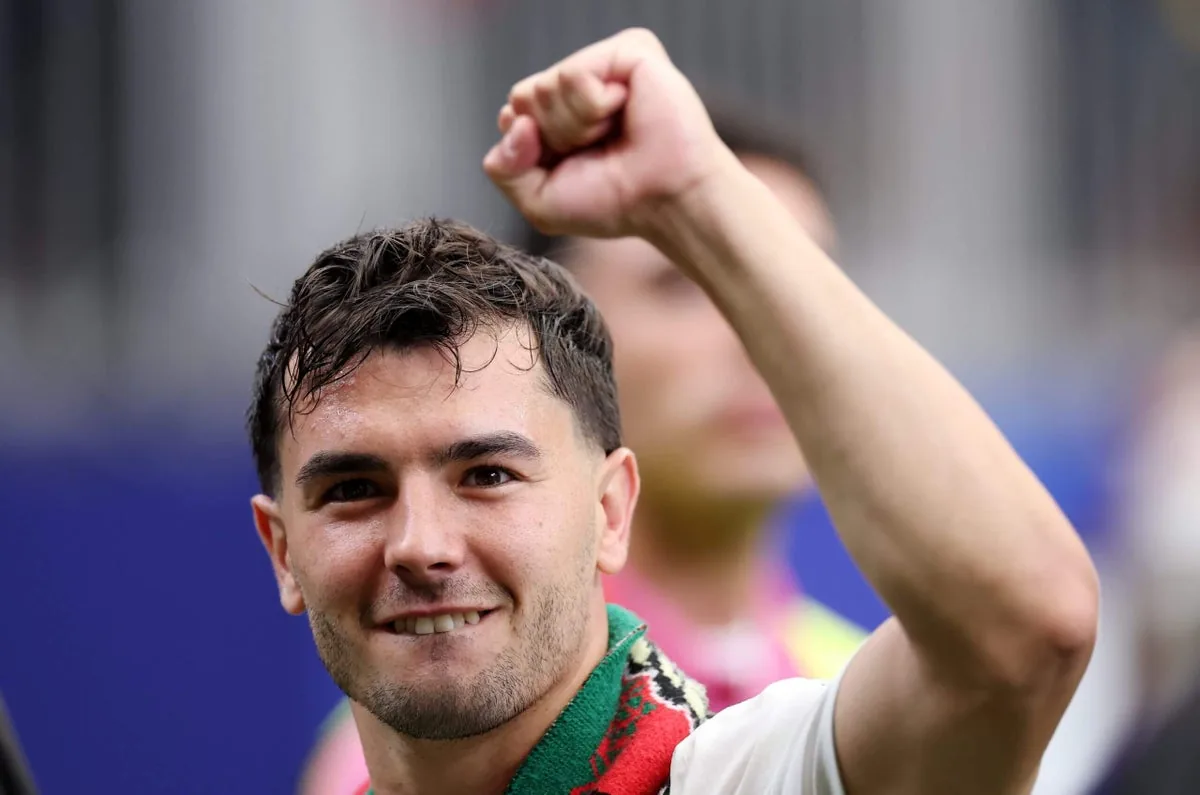
Bouaddi’s Historic World Cup Appearance
Moroccan midfielder Ayyoub Bouaddi made history on Thursday night, becoming the second-youngest player to participate in a FIFA World Cup quarter-final match. Despite this personal milestone, Morocco was defeated 2-0 by France, ending their tournament run. Bouaddi’s inclusion in the starting lineup placed him in an exclusive group, second only to Brazilian legend Pelé in tournament records.
Pelé holds the record for being the youngest quarter-finalist, having played in the 1958 World Cup quarter-final against Wales at the age of 17 years and 239 days. Bouaddi’s appearance, despite the team’s elimination, highlighted the emerging young talent within Moroccan football.
Morocco head coach Mohamed Ouahbi demonstrated considerable courage by starting the young player in the high-stakes knockout match, especially given pre-match disciplinary concerns and injuries to other key players. Facing a formidable French midfield that included players like Manu Koné, Bouaddi displayed maturity beyond his years, distributing the ball effectively and contributing defensively before France took control of the game.
The young midfielder, who plays his club football in Europe, maintained composure despite the significant crowd and global attention. His calm presence on the ball provided structural balance for the Atlas Lions in the midfield during an intense match, though France’s experience ultimately proved too much for Morocco to overcome.
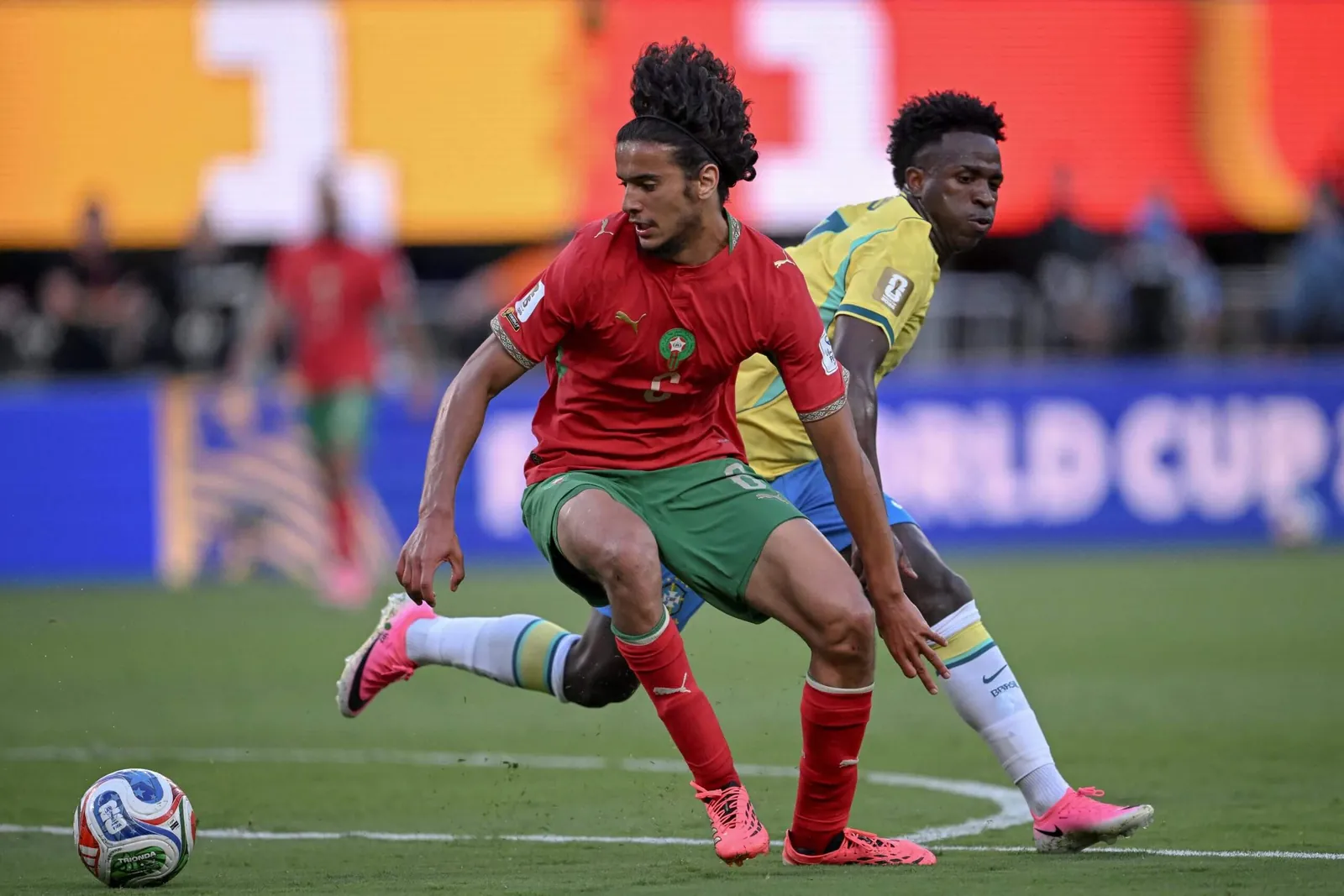
Morocco’s Recruitment Strategy and Bouaddi’s Background
Bouaddi, who is 18 years old, has been recognised as one of the breakout stars of the tournament, showcasing notable technical ability and composure in midfield. His performance during a 1-1 draw with Brazil in the group stage was particularly dominant. An interesting aspect of Bouaddi’s journey is that he was born in France and represented the country at youth level as recently as March of this year, before choosing to switch allegiance to Morocco approximately a month before the World Cup commenced.
Bouaddi’s situation is not unique within the Moroccan squad. The 26-member squad for this tournament includes 19 players born outside Morocco, with origins in countries such as France, Spain, the Netherlands, Belgium, or Canada. These players are eligible to represent Morocco through their family backgrounds.
Morocco’s strategic approach to recruiting players from its global diaspora has significantly contributed to the transformation of its footballing fortunes. This strategy gained momentum in 2014 with new leadership at the Moroccan Football Association. Fouzi Lekjaa, the current president, established a dedicated department to scout and liaise with diaspora players, formalising what was previously an informal process.
This initiative aligned with government priorities to enhance Morocco’s standing in global football. The country had participated in the 1998 World Cup finals, where two players in the 22-strong squad were born outside Morocco, but had not qualified since. The authorities aimed to leverage football for political and social benefits.
Nasser Larguet, then Morocco’s technical director, was initially responsible for this new department, which is now led by Rabie Takassa. Takassa coordinates a team of seven scouts across Europe, maintaining a database of nearly 3,000 Moroccan players in Europe, identified from as young as eight or nine years old. The focus is on early personal contact with promising youngsters and their families, highlighting the sporting project and facilities, including the King Mohammed VI Football Academy near Rabat.
Impact and Future Prospects
The success of this recruitment drive is evident in Morocco’s recent World Cup performances. In 2018, key players like French-born defender Romain Saiss, Madrid-born full-back Achraf Hakimi, and Dutch-born midfielder Sofyan Amrabat were part of the squad. At the 2022 tournament, Morocco reached the semi-finals with 14 players born outside the country, marking the first time an African nation had advanced that far in a World Cup. This number increased to 19 in the current tournament.
One of the most prominent examples of this strategy is Real Madrid playmaker Brahim Diaz, born in Malaga, Spain, who was eligible through his paternal grandmother. Despite initially prioritising Spain and even making a senior debut for them in 2021, Morocco’s persistent courtship, including efforts from manager Walid Regragui and FA president Lekjaa, eventually led to Diaz representing Morocco. He has started all five of Morocco’s World Cup finals matches on their path to the quarter-finals.
Bouaddi’s historic achievement concludes a significant tournament for him, having initially been considered a squad rotation player. His breakthrough performances in earlier rounds convinced the coaching staff of his readiness for international football. While Morocco exited the tournament after the 2-0 defeat, Bouaddi’s feat of joining a record list alongside Pelé is seen as a proud moment for African football, suggesting a promising career ahead for both club and country. His performance against Brazil, where he completed 61 of 66 attempted passes and had the most touches (88) and successful duels (11), was particularly noted by coach Mohamed Ouahbi.
Read Also
- Norway striker Erling Haaland says all the pressure is on England ahead of World Cup quarter-final
- Noskova defeats Kostyuk to reach all-Czech Wimbledon final
- Boston: Kylian Mbappé reaches World Cup appearance milestone as France faces Morocco
- Miami set for World Cup quarter-final showdown between England and Norway
Source: timesofindia.indiatimes.com

Arjun Sharma
Sports Reporter