
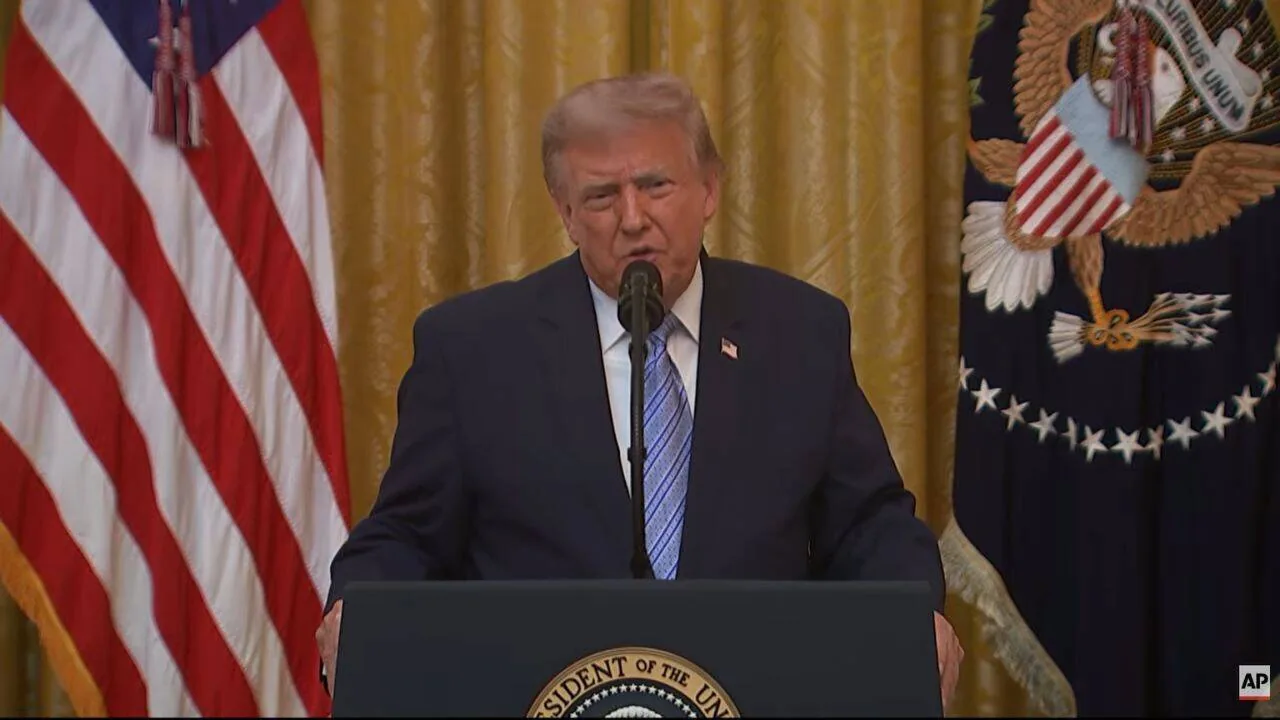
New York is set to host the final match of the World Cup 2026 between Argentina and Spain, with President Donald Trump scheduled to present the trophy to the winning team. The tournament, co-hosted by the United States, Canada, and Mexico, has been described by Trump as a significant event that brought the world together.
Speaking at a FIFA reception at Trump Tower in New York City, President Trump remarked on the success of the tournament, suggesting that the U.S. has proven itself to be a soccer nation. The event has navigated various logistical challenges, including balancing migration policies with the entry of fans from different countries.
The White House FIFA Task Force executive director, Andrew Giuliani, highlighted that the focus shifted to the athletic and cultural moments of the tournament. Despite initial concerns regarding immigration enforcement, these fears did not materialise, and social media showcased fans from around the world enjoying U.S. traditions.
Tournament Logistics and Controversies
The organisation of the World Cup involved significant efforts to manage a range of issues, from high ticket prices to transit costs. The administration also faced scrutiny over its visa decisions, including the denial of entry to a referee from Somalia and challenges with the Iranian team due to a conflict with Iran.
A notable controversy arose when President Trump contacted FIFA chief Gianni Infantino regarding a red card issued to U.S. forward Folarin Balogun during a match against Bosnia and Herzegovina. The red card, which would have prevented Balogun from playing in the subsequent match against Belgium, was later rescinded by FIFA. Trump noted that this decision allowed the U.S. to retain a key player, although the team ultimately lost to Belgium.
Giuliani stated that the administration felt it had a duty to question the officiating process, especially given the use of video review for the red card decision. He also mentioned the substantial federal funding invested to ensure the World Cup was a secure and fair event.
Geopolitical Dynamics and Future Hosting
The World Cup also highlighted broader tensions between the United States and its co-hosts, Canada and Mexico. President Trump had previously imposed tariffs on both countries and opted not to renew a trade pact among the three nations. He also made a jest about hosting a future World Cup without Canada and Mexico.
Despite these tensions, Mexican President Claudia Sheinbaum and Canadian Prime Minister Mark Carney are expected to attend the final at President Trump’s invitation, indicating that the sport can bridge some geopolitical divides. Spanish Prime Minister Pedro Sanchez also plans to attend, while Argentine President Javier Milei will not be present.
The United States is also preparing to host the 2028 Summer Olympics in Los Angeles and the 2034 Winter Olympics in Salt Lake City. Furthermore, the U.S. is largely anticipated to be awarded the 2031 Women’s World Cup, with Giuliani emphasising that hosting duties would involve ensuring only women participate in the tournament.
The final match will feature Argentina, led by captain Lionel Messi, against Spain. Messi currently leads the Golden Boot race after providing two assists in Argentina’s semi-final victory over England, while Spain secured their spot by defeating France.
Read Also
Source: apnews.com

Arjun Sharma
Sports Reporter