
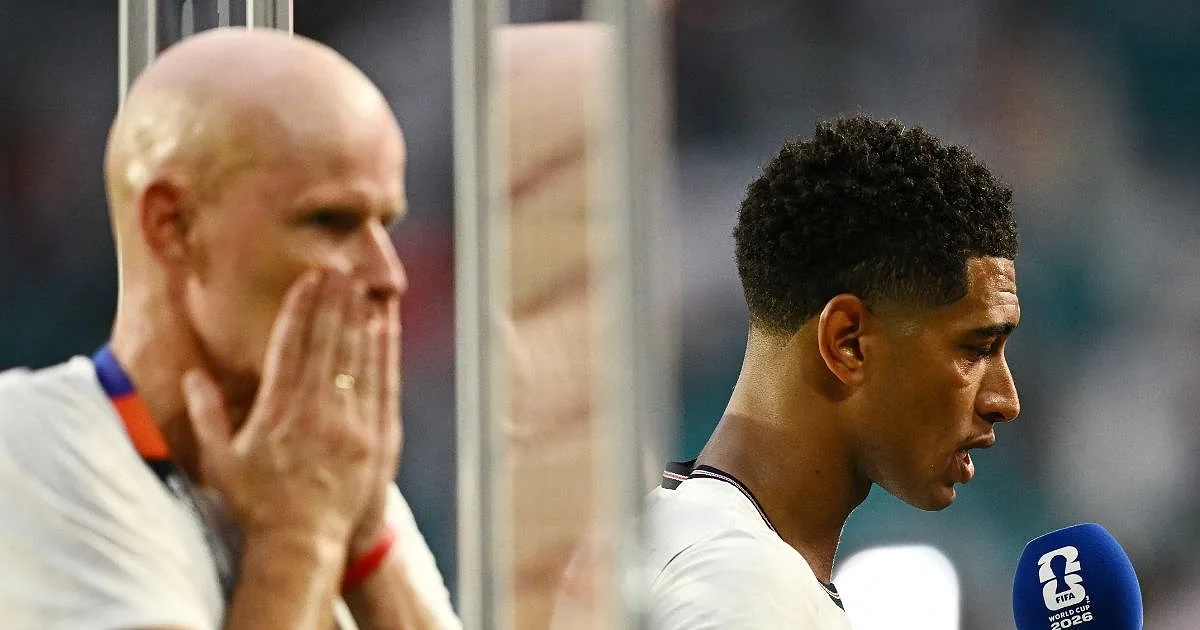
England has advanced to the semi-finals of the World Cup 2026, where they are set to play Argentina. This development follows their quarter-final victory against Norway, a match that has since generated discussions regarding officiating and technology. Meanwhile, Switzerland has also voiced strong objections concerning a refereeing decision that impacted their tournament progression.
Norway coach Stale Solbakken raised concerns about a spider-cam cable potentially interfering with play just before Jude Bellingham scored England’s equaliser. Solbakken stated that his goalkeeper, players, and coaching staff believed the ball changed direction unnaturally after hitting a cable. The incident occurred during stoppage time in the first half when Norway goalkeeper Orjan Nyland made a clearance kick, and the ball subsequently fell to an England player, initiating the sequence that led to Bellingham’s goal.
During the break, Solbakken reportedly complained to officials about the incident, but was informed that the referee had not witnessed it, and there was no communication from VAR. Solbakken noted in his post-match press conference that the ball “fell straight down from the sky,” causing a misunderstanding among his players at a critical moment. He acknowledged that nothing could be done to change the outcome of the match.
FIFA released a statement on social media during the match, asserting that there was “no evidence that the ball touched the overhead wire and changed the movement of the ball.” The statement further indicated that the sensor in the ‘Connected Ball’ showed no peak in its ‘heartbeat’ when the ball was in the air before England’s goal in minute 45+2. Solbakken, while not personally seeing the ball change direction, maintained that his players and staff were convinced it did. He questioned the reliability of the chip data if it contradicted the observations of multiple individuals on the field.
Despite his concerns, Solbakken emphasised that he did not want the incident to overshadow Norway’s overall performance in the World Cup, their first since 1998. He expressed hope that the team’s journey to the quarter-finals would be remembered for more than this single event. England manager Thomas Tuchel mentioned he was unaware of the incident but trusted the Connected Ball technology to determine if any contact had occurred. This technology had previously been instrumental in detecting a decisive touch during Croatia’s Round of 32 defeat to Portugal.
Switzerland’s VAR Controversy
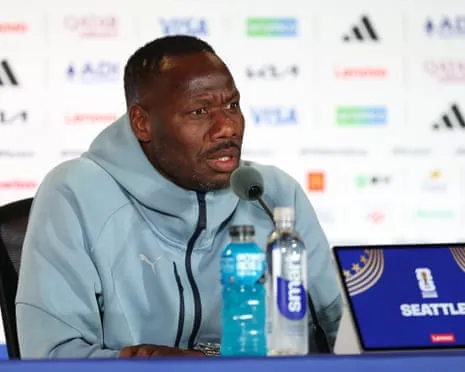
Switzerland continues to express frustration over the application of the “mistaken identity” rule, which resulted in Breel Embolo’s sending off for simulation. This decision came after Leandro Paredes had initially received a booking for fouling Embolo. Murat Yakin, Switzerland’s head coach, found himself in the unusual position of arguing that Paredes should not have been booked in the first place. Yakin suggested that if Paredes had not been shown a yellow card, VAR would not have been able to intervene to revoke it and instead penalise Embolo.
Yakin stated, “There was definitely no reason to award that yellow card [to Paredes], I don’t understand it.” He described the situation as “harmless” and expressed confusion regarding the decision that led to his player’s dismissal. Yakin lamented that this rule “destroyed our game today,” adding that it was “extremely hurtful.” He conveyed his belief that Switzerland deserved to reach the semi-finals and that their elimination in such a manner was deeply painful, despite his pride in the team’s tournament performance.
England’s Path to the Semi-Finals
England’s victory over Norway secured their spot in the semi-finals. Jude Bellingham, a key player for England, managed to avoid a yellow card during the quarter-final, which would have resulted in a suspension for the semi-final match. Bellingham attributed his careful play to advice from his mother, Denise, who had reportedly counselled him throughout the week to manage his language, tackles, face, and emotions to prevent a booking. He noted that the referee, Clément Turpin, allowed respectful communication, which made it easier to maintain composure.

Bellingham described the game as having various facets, highlighting the psychological aspect and the team’s ability to manage setbacks and adversity. He expressed confidence in his team’s capacity to navigate challenges, a valuable trait at this stage of the tournament. England’s next challenge will be against Argentina in the semi-finals.
The use of VAR has once again become a prominent topic of discussion in the knockout stages of the World Cup. After initial praise for less micromanagement during the group stage, the technology’s influence on game outcomes has reignited debate. Some observers suggest that the increased pressure on officials or a perceived addiction to drama by football’s decision-makers might be contributing factors. Many fans reportedly prefer less VAR intervention, with some advocating for its complete removal, particularly regarding the re-refereeing of minor incidents.
The sentiment among some is that VAR, despite its technical correctness, can be manipulated to influence game outcomes, potentially favouring commercially successful teams. This perspective suggests that the technology allows for the disallowing of goals or the issuing of cards based on technicalities, thereby shaping the progression of the tournament. The upcoming semi-final between England and Argentina is anticipated to be a significant fixture.
Read Also
- Miami: England advance to World Cup semifinals after controversial win over Norway
- India begins ODI series preparation at Edgbaston after T20I losses
- Breel Embolo sent off in World Cup quarter-final due to mistaken identity rule
- Kansas City sees Argentina advance to semi-finals after extra-time win over Switzerland
Source: theguardian.com

Arjun Sharma
Sports Reporter