
FIFA has initiated disciplinary proceedings against several Argentina players, coaching staff, and the Argentine Football Association (AFA) following incidents that occurred during and after the 2026 FIFA World Cup. The charges stem from the aftermath of Argentina’s 1-0 extra-time defeat to Spain in the World Cup final, as well as events surrounding the team’s semi-final victory over England and fan behaviour throughout the tournament.
Player Charges and Altercations
Among the players facing serious allegations are Argentina midfielder Leandro Paredes and defender Nahuel Molina. Paredes has been charged with three counts of assault under Article 14 of the FIFA Disciplinary Code. These charges relate to allegations that he grabbed and pushed Spain players, including Eric García and Gavi, during a post-match altercation following the final.
Molina faces two counts of assault, one completed and one attempted, for allegedly striking Spain captain Rodri. He also faces an additional charge of unsporting behaviour. Assistant coach Roberto Ayala has been charged with assault for his involvement in the confrontation, while winger Thiago Almada has been cited for unsporting conduct. Spain midfielder Gavi is also under investigation and has been charged with one count of unsporting behaviour arising from the same incident.
Falklands Banner and Additional Allegations
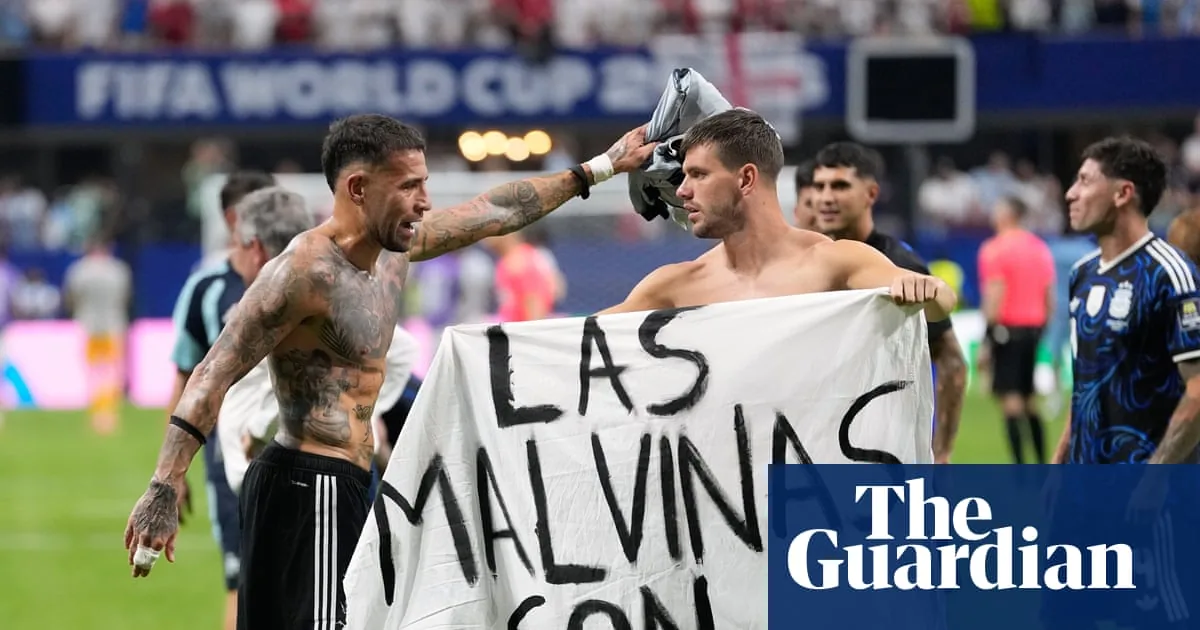
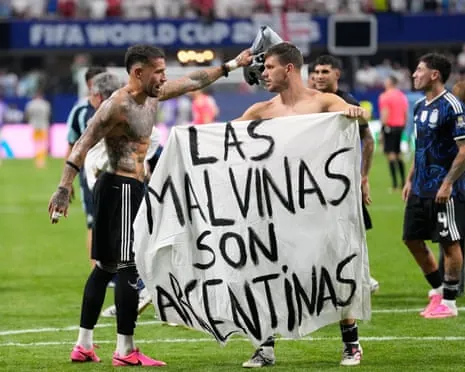
Beyond the on-field clashes, FIFA has also charged the Argentine Football Association (AFA) after Argentina players displayed a banner reading “Las Malvinas son Argentinas” (“The Malvinas are Argentine”) following their 2-1 semi-final victory over England in Atlanta. This slogan refers to the Falkland Islands, known as the Islas Malvinas in Argentina. The islands are the subject of a long-standing sovereignty dispute between Argentina and the United Kingdom, making the banner a politically sensitive statement.
FIFA alleges that the display of this banner amounted to using a sporting event for a non-sporting political demonstration, which is prohibited under its disciplinary regulations. The dispute over the islands has been ongoing, with Britain ruling them since 1833, and it led to a 74-day conflict in 1982.
This is not the first instance of an Argentina team expressing such sentiments; in 2014, FIFA fined Argentina £20,000 for a larger banner displayed by players before a friendly match with Slovenia.
The disciplinary case against the AFA extends beyond the banner incident and includes several alleged breaches recorded throughout the tournament. The governing body is investigating:
- Alleged discriminatory chants and gestures by Argentina supporters.
- Throwing of objects by spectators during multiple matches.
- Alleged failures relating to match organisation and security protocols.
- Team misconduct linked to the mass confrontation after the World Cup final.
These matters will be reviewed separately by FIFA’s Disciplinary Committee.
Potential Consequences
British government officials had urged FIFA to investigate the banner incident. FIFA confirmed that the formal charge was for “using a sports event for demonstrations of a non-sporting nature.”
All individuals and entities charged have been provided with the opportunity to present their position. A decision will be issued by the FIFA Disciplinary Committee in due course. If found guilty, the players could face match suspensions and financial penalties. Assault offences under FIFA’s disciplinary regulations can carry bans of at least three matches, while unsporting behaviour may result in a minimum one-match suspension.
Source: timesofindia.indiatimes.com

Arjun Sharma
Sports Reporter